
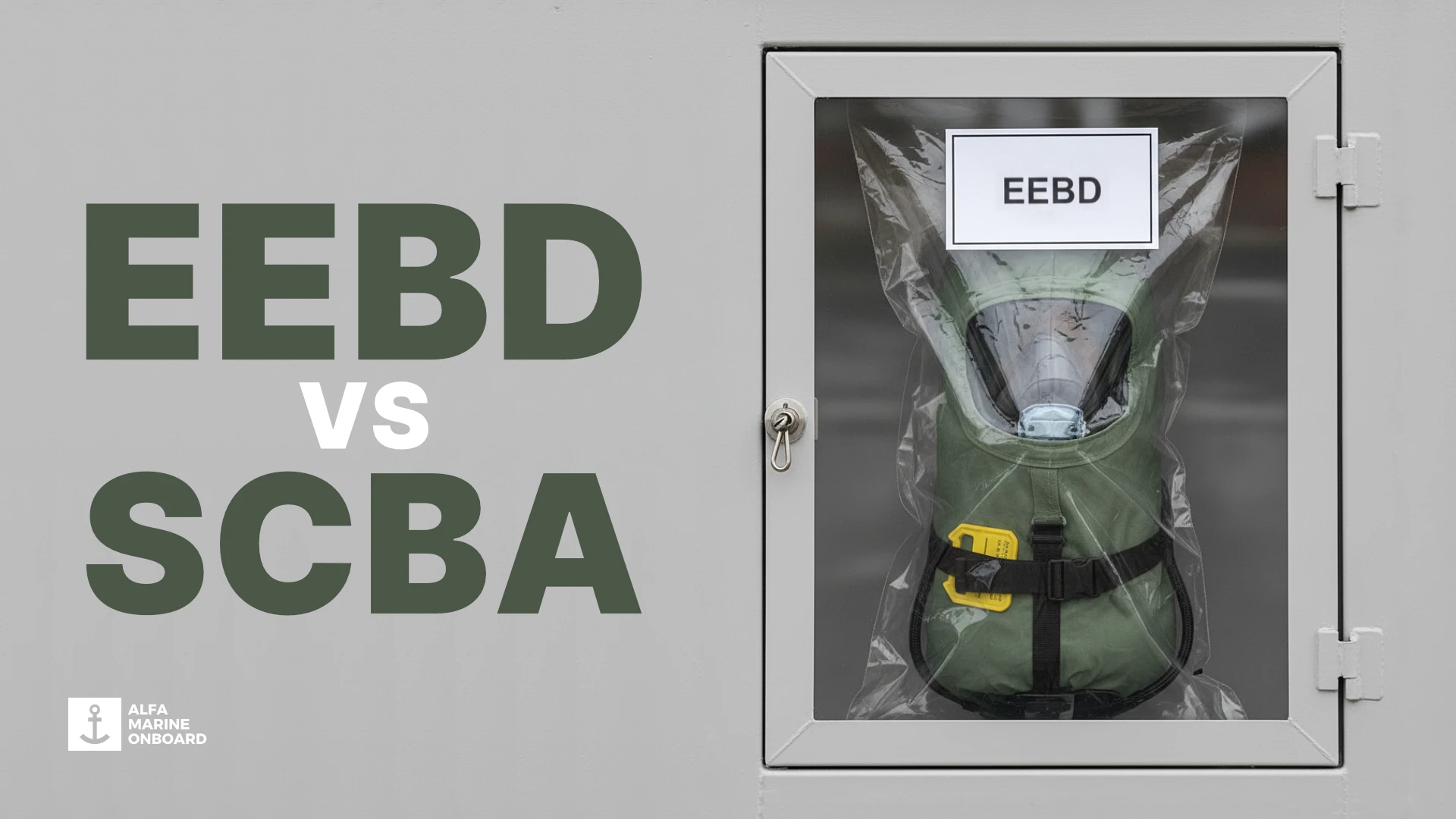
SCBA vs. EEBD: Navigating Respiratory Protection at Sea
While our previous guide covered the general importance of air quality, today we dive into the specific hardware mandated by maritime regulations: Self-Contained Breathing Apparatus (SCBA) and Emergency Escape Breathing Devices (EEBD).
Knowing which tool to use can mean the difference between a successful evacuation and a tragedy.
1. SCBA (Self-Contained Breathing Apparatus): The Tactical Tool
The SCBA is designed for working in hazardous environments. It is the primary gear for fire-fighting teams and entry into enclosed spaces.
- Purpose: Active firefighting, search and rescue, or maintenance in toxic atmospheres.
- Duration: Typically 30 to 45 minutes of air.
- Key Feature: High-pressure cylinders and positive-pressure masks that prevent toxic gases from leaking in.
2. EEBD (Emergency Escape Breathing Device): The Life-Saver
An EEBD is strictly for escape only. It is never to be used for firefighting or entering a known hazard.
- Purpose: Rapid evacuation from engine rooms or other spaces filled with smoke or toxic fumes.
- Duration: Minimum of 10 minutes (per SOLAS requirements).
- Key Feature: Usually features a simple hood that fits over the head, allowing for quick donning even by untrained personnel.
Expert Tip: Under SOLAS regulations, EEBDs must be strategically located along escape routes and within the machinery spaces. They are marked with distinctive signs and must be checked regularly for cylinder pressure.
| Feature | SCBA (Breathing Apparatus) | EEBD (Escape Device) |
| Main Function | Firefighting & Rescue | Emergency Evacuation |
| Air Supply | 30+ minutes | 10–15 minutes |
| Training | Requires specialized training | Simple instruction (don and go) |
| Usage | Reusable (refillable cylinders) | One-time use during emergency |
Comparison at a Glance
Maintenance and Compliance
Both SCBA and EEBD units require strict maintenance schedules to ensure reliability:
- Annual Inspections: Must be performed by certified service providers.
- Hydrostatic Testing: Cylinders must undergo pressure testing (usually every 5 years).
- Visual Checks: Monthly inspections by the ship’s Safety Officer to verify pressure gauges are in the “green” zone.
At Alfa Onboard, we don’t just supply this equipment—we ensure it meets the highest international standards (MED/Wheelmark) to keep your crew breathing safely when it matters most.
Simply email us for our full offerings.