
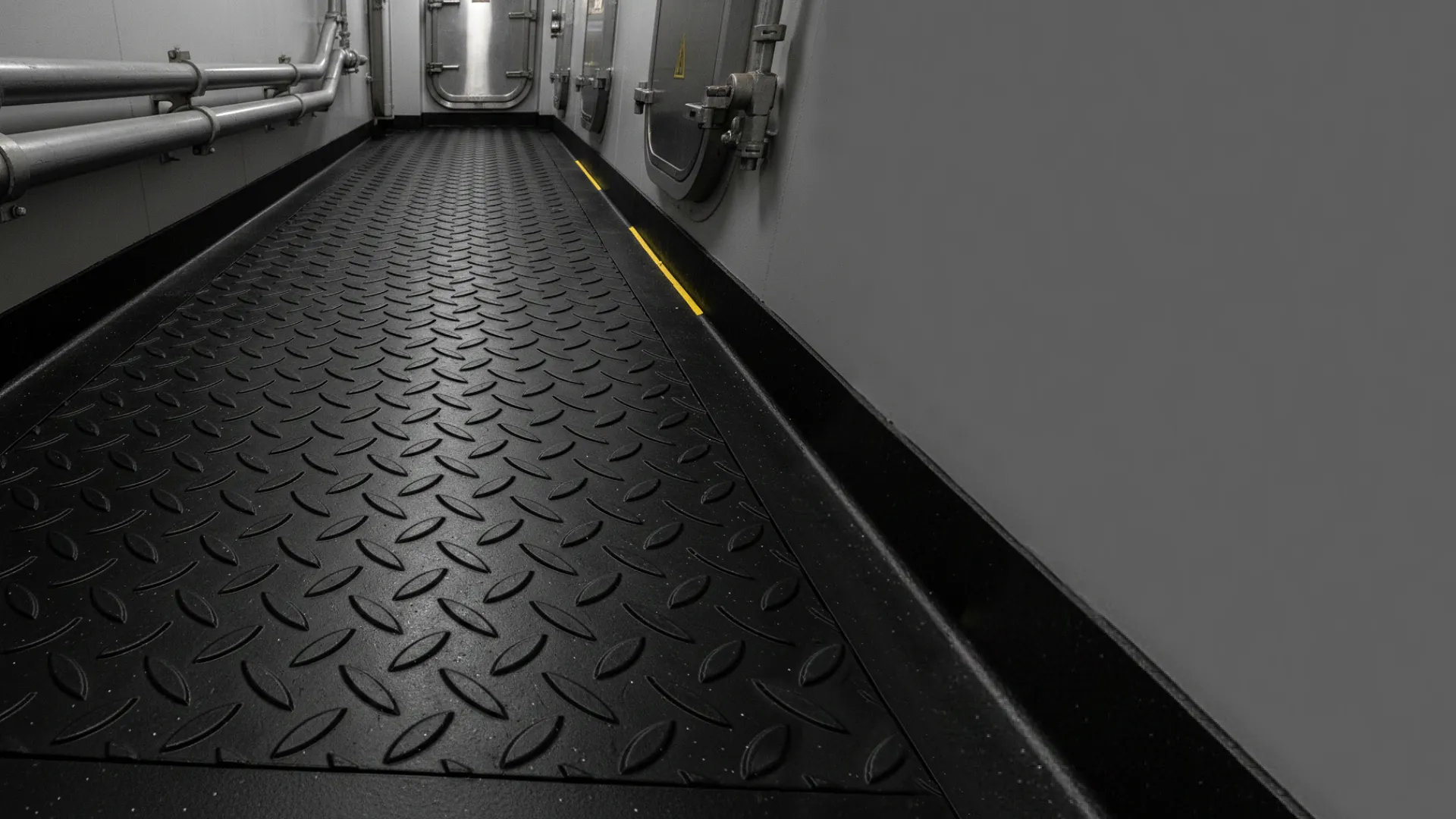
When designing or refitting a vessel, the focus often goes to the powerful engine or state-of-the-art navigation systems. Yet, one of the most fundamental components ensuring crew safety, passenger comfort, and regulatory compliance is literally underfoot: the marine deck covering. In the demanding offshore and maritime environment, a floor is never just a floor—it is a specialized, engineered system.
The Triple Mandate: Safety, Solas, and Sound
Deck coverings for ships and offshore platforms must meet extraordinarily high standards due to constant exposure to moisture, heavy loads, vibrations, and the critical need for fire safety.
Deck coverings for ships and offshore platforms must meet extraordinarily high standards due to constant exposure to moisture, heavy loads, vibrations, and the critical need for fire safety.
1. The Safety Foundation: Anti-Slip and Durability
Safety is paramount, and the first line of defense is preventing slips and falls.
- Anti-Slip Properties: Deck coverings must maintain high traction, even when wet, oily, or exposed to chemicals. Specialized rubber compounds (such as SBR, NBR for oil resistance, or EPDM) are commonly used in high-traffic zones, galleys, and engine rooms for their natural anti-slip qualities and resilience to wear.
- Chemical and Abrasion Resistance: Given the operational intensity, materials must be highly resistant to heavy cleaning agents, oils, and constant foot traffic to ensure a long lifecycle.
2. SOLAS Compliance: Fire Safety Engineering
The most stringent requirement for any material used at sea is compliance with the International Maritime Organization (IMO) and Safety of Life at Sea (SOLAS) regulations. Materials must hold specific marine certifications (often marked with the “Wheelmark”) confirming their fire-retardant properties.
This is where advanced systems come into play. Many modern vessels utilize “Floating Floors” to meet demanding fire protection and insulation standards.
The construction of these floating floors often incorporates a layer of certified, non-combustible material (like mineral wool) to achieve required fire resistance ratings, such as A-60, which prevents the passage of fire for at least 60 minutes.
3. Acoustic Comfort: Dampening Noise and Vibrations
The noise and vibration generated by a ship’s engine, machinery, and hull can significantly degrade the quality of life for the crew and passengers. Deck coverings play a vital role in mitigation.
- The Power of Floating Floors: The most effective solution for minimizing structure-borne noise and vibrations is the “floating floor” system. This design decouples the visible top layer of the deck (be it a specialized marine screed, steel plates, or Marine Interiors aesthetic finish like LinoMarine or certified LVT) from the main hull structure.
- Vibro-Isolation Layer: The decoupling is achieved through an intermediate layer made of visco-elastic materials, specialized rubber mats, or high-density acoustic foams. This isolation layer dramatically reduces both impact noise (foot traffic) and airborne noise traveling through the hull. Advanced floating floor systems can achieve noise reduction levels exceeding 60 dB.
Beyond Function: Lightweight and Aesthetics
Modern offshore designs also prioritize weight and aesthetics. The latest solutions focus on ultra-lightweight composites to decrease vessel mass (saving fuel and reducing emissions) without compromising on safety or sound insulation. This allows for diverse, certified finishing materials—from heavy-duty vinyl and anti-static rubber to premium marine carpets—to ensure both a safe and visually appealing Marine Interior.
Conclusion
From resisting oil in the engine room to ensuring quiet comfort in a passenger cabin, the specification of marine deck coverings is a sophisticated engineering task. Choosing the right, certified system is not just a matter of compliance, but a direct investment in the long-term safety, operational efficiency, and overall living quality aboard the vessel.
Don’t compromise on underfoot safety. To find the right certified marine deck solution for your project, contact our experts today for a consultation.
Simply email us for our full offerings.