
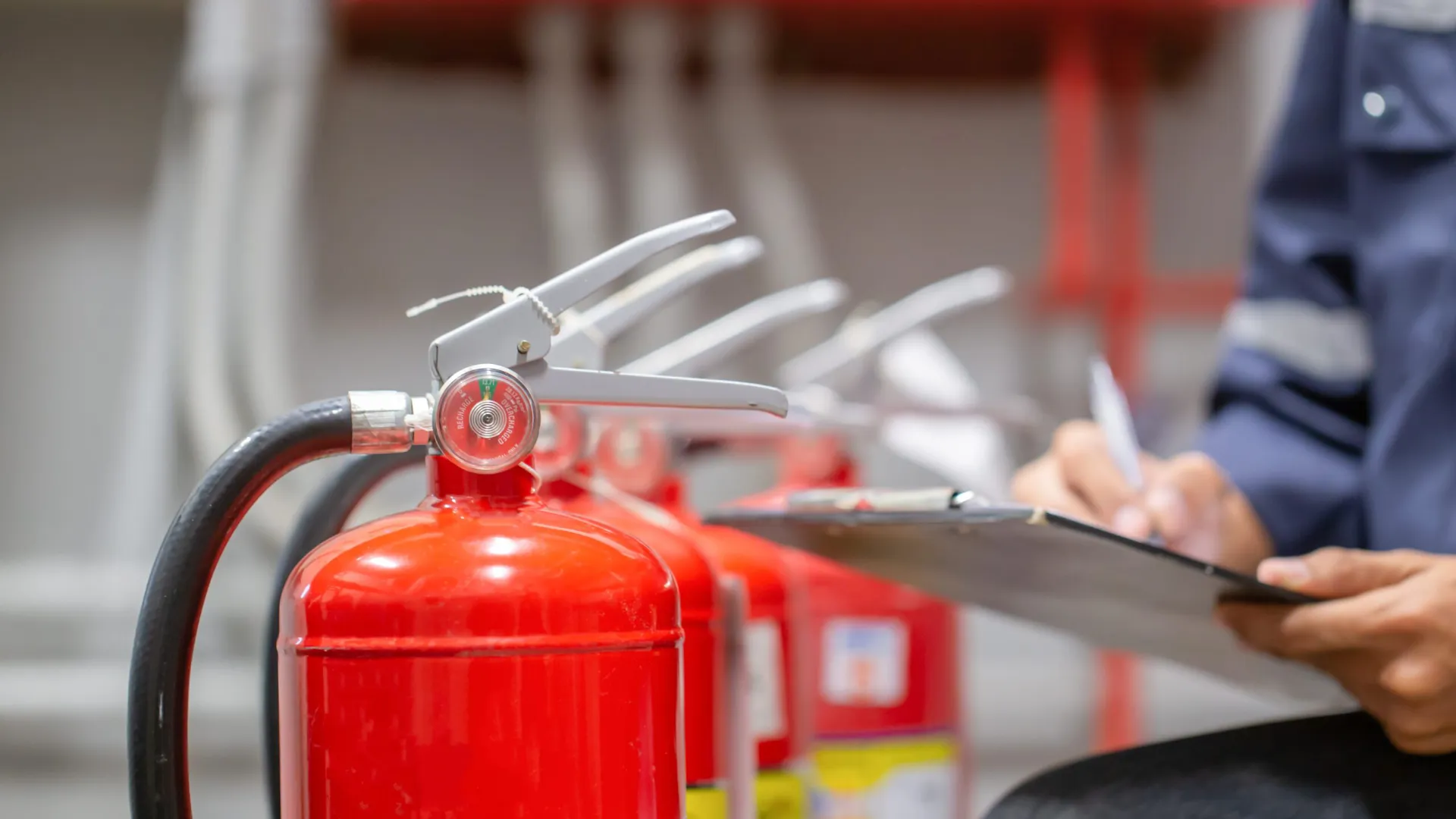
A fire at sea is arguably the greatest fear of any shipowner, captain, and crew. Unlike on land, where help is minutes away, an offshore incident requires immediate and decisive action from the crew. This is why portable and semi-portable fire extinguishers are not just mandatory pieces of equipment; they are the crucial first line of defense that buys time and can prevent a minor incident from escalating into a catastrophic event.
At Alfa OnBoard, we understand that safety compliance and reliability are non-negotiable. This article will guide you through the essentials: how to correctly select, strategically position, and meticulously maintain your fleet’s fire extinguishing units to ensure full SOLAS compliance and maximum protection.
Types of Extinguishers and Classes of Fire
Effective fire fighting begins with knowing your enemy—the type of fire—and matching it with the correct extinguishing agent.
Understanding the Units: Portable vs. Semi-Portable
- Portable Units: These are the standard, hand-held extinguishers (typically up to 12-15 kg) designed for rapid response by a single crew member. They are distributed widely across all decks, accommodation areas, and control spaces.
- Semi-Portable Units: Also known as wheeled or trolley units, these are larger capacity extinguishers (often 20 kg or more) designed for use in high-risk areas like the machinery space or cargo holds. Their increased size provides greater extinguishing power for larger, developing fires.
Matching the Agent to the Hazard (Fire Classes)
International standards classify fires based on the materials involved. A maritime vessel contains hazards corresponding to several classes:
| Class | Material | Location on Ship | Recommended Agent |
| A | Solids (Wood, paper, fabrics) | Accommodation, stores | Water, Foam, Dry Powder |
| B | Flammable Liquids (Fuels, oils, lubricants) | Engine room, bunkers | Foam, Dry Powder, CO2 |
| C | Flammable Gases | Certain cargo tankers | Dry Powder, CO2 |
| D | Combustible Metals | Rarely present, specialized cargo | Specialized Powder |
| F / K | Cooking Oils and Fats | Galley/Pantry | Wet Chemical |
Alfa OnBoard Tip: For areas with sensitive electronic equipment (e.g., bridge or control rooms), Carbon Dioxide CO2 or clean agents are preferred, as they leave no residue, preventing further damage.
Regulatory Requirements and SOLAS Compliance
Compliance with the International Convention for the Safety of Life at Sea (SOLAS) is mandatory. Chapter II-2 explicitly details the fire protection, detection, and extinguishing requirements for ships.
Number, Distribution, and Location
SOLAS stipulates minimum requirements for the number and type of portable fire extinguishers based on the vessel’s size and the nature of the area. Key requirements include:
- Accessibility: Extinguishers must be readily accessible, conspicuously located, and clearly marked.
- Distance: The distance to the nearest fire extinguisher should generally not exceed 15 meters (or 50 feet). This ensures rapid deployment upon discovery of a fire.
- Type Specificity: The agents chosen must be appropriate for the fire hazard in the area where they are located. For instance, the machinery spaces require a specific number of CO2 or foam units.
Maritime Certification: The Wheelmark
All equipment provided for use on board a vessel must hold valid certification. For equipment on vessels flagged within the EU or meeting equivalent international standards, look for the MED (Marine Equipment Directive) / Wheelmark.
When you source your safety equipment from Alfa OnBoard, you are guaranteed that every unit—from 6kg Dry Powder to 50kg Foam Trolleys—possesses the necessary marine type approvals and certification from recognized classification societies. This eliminates the risk of detention or non-compliance during port state control inspections.
Want to know about the upcoming 2026 PFOS ban? Read our dedicated guide on PFOS-FREE compliance and the 2026 transition here – SOLAS 2026 Countdown: Everything You Need to Know About PFOS-FREE Firefighting on Ships.
Maintenance, Inspection, and Crew Training
The most expensive extinguisher is useless if it fails during a crisis. SOLAS requires a rigorous schedule of inspections and maintenance.
| Frequency | Action | Responsibility | Key Check Points |
| Monthly | Visual Inspection | Designated Crew Member | Location, accessibility, tamper seals, pressure gauge (must be in green zone). |
| Annual | Servicing | Shore-based Certified Technician | Full inspection, weighing CO2 bottles, checking hoses and discharge nozzles. |
| 5/10 Years | Hydraulic Pressure Test | Shore-based Certified Technician | Full discharge, dismantling, internal inspection, pressure testing of the cylinder. |
Training Makes the Difference
A well-maintained extinguisher requires a trained operator. Regular fire drills and familiarization training are essential to ensure that every crew member:
- Knows the location and type of extinguishers in their duty area.
- Understands the PASS technique (Pull, Aim, Squeeze, Sweep).
- Can quickly identify the class of fire and select the correct suppression agent.
The constant challenge in managing a successful fleet is balancing operational efficiency with uncompromising safety. When it comes to fire protection, cutting corners is simply not an option. Investing in fully certified, reliable portable and semi-portable fire extinguishing units and maintaining them according to strict standards is an investment in the safety of your crew, the protection of your cargo, and the continuity of your operations.
Don’t wait for the next port state control inspection to verify your compliance. Contact Alfa OnBoard today to explore our extensive range of MED-certified portable and semi-portable extinguishers designed specifically for the demanding marine environment.
Simply email us for our full offerings.